Search

Google
 
Showing posts with label Eee PC. Show all posts

2008/12/25

Psion pushing takedowns over "netbook" name


Sites using the term "netbook" to refer to the recent wave of mini notebooks are starting to receive cease and desist letters over its alleged infringement of a trademark for a Psion device with a similar name, say site owners reporting their problems to jkOnTheRun. The largely defunct PDA maker has claimed that various enthusiast pages are inadvertently using the name of its discontinued netBook and netBook Pro devices and is asking the sites to phase out use of the term by the end of March. Psion doesn't say what the consequences will be but warns that continued use will "damage" its trademarks. The accusations are controversial both through their attempt to link a generic term to a no longer produced device but also through their implications for Intel, which is largely credited with inventing the modern use of "netbook" and promoting its use. No action is yet known to have been taken against Intel, nor have any immediate links been made between Psion's Linux-based organizer and the newer, more abstract concept.

The current definition of the word refers to a very small notebook built primarily for accessing the Internet and which doesn't need large amounts of processing power or storage as a result. Psion's device shares similarities in its blend between PDA and notebook functions but is focused more on offline content and runs a relatively feature-limited operating system versus the full Linux or Windows XP operating systems on today's systems.

2008/03/20

Intel cheap laptops expanding to U.S., Europe


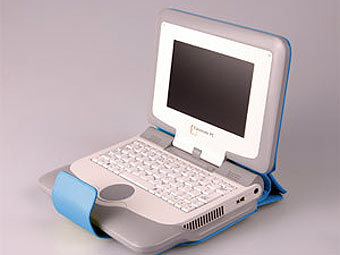
Intel Corp (INTC.O: Quote, Profile, Research) said on Wednesday sub-$300 laptops initially designed for poor children will soon be available to U.S. and European consumers in a move that could further push down computer prices.

PC makers in the United States and in Europe will sell a yet-to-be-unveiled, second-generation version of the Intel-designed Classmate PC for $250 to $350, said Lila Ibrahim, general manager of Intel's emerging market platform's group, in an interview with Reuters.

"This is a very big deal," said Laura Didio, an analyst with Yankee Group who follows the personal computer industry.

While the machines are intended for children, analysts said the launch will add momentum to the low-cost computing movement -- and will likely mean this year's bargain-basement laptops will have more power than in previous years.

"Particularly in a recession year, quality low-cost products are going to move well," said Rob Enderle, an analyst with the Enderle Group. "But the key is for them to be quality."

He said while he hasn't yet seen the machines that will be on sale this Christmas, he suspects consumers will be able to get "a pretty decent" laptop for less than $600 and perhaps for less than $500.

Didio said retailers might throw in another $50 to $100 in rebates or other incentives.

Laptop prices have been under extra pressure since last year, when Taiwan's Asustek Computer Inc (2357.TW: Quote, Profile, Research) introduced the $399 Eee PC, which has flown off store shelves from Asia to North America

The machine runs on the Linux operating system, and people used to Microsoft's (MSFT.O: Quote, Profile, Research) Windows and Apple's (AAPL.O: Quote, Profile, Research) Mac OS X operating systems have had trouble adapting to the system, Enderle said.

The new, cheap laptops being developed from Intel's technology will likely run on Windows, he added.

The movement toward low-cost computing was also spurred by the XO laptop, the brainchild of Massachusetts Institute of Technology professor Nicholas Negroponte and his One Laptop Per Child Foundation.

The foundation began producing a laptop running on Linux at a cost of $188 in November. They sold them in the United States and in Canada for $400 through a charity drive that also provided one machine to a poor child overseas.

The chipmaker has conducted pilot tests of the Classmate PC at schools in Texas, Oregon and California, along with some schools in Australia, said Intel spokeswoman Agnes Kwan.

Intel said manufacturers in India, Mexico and Indonesia already have begun selling Classmate PC laptops on the retail market.

To date, Intel has sold fewer than 100,000 of the Classmate PCs, but plans to ramp up production in 2008.

Intel declined to identify the PC makers or discuss the features of the second-generation machine, which has not yet been released in developing markets, at the request of the companies.

It has already begun work on a third model, the Classmate 3, said Ibrahim.

The second- and third-generation models of the Classmate PC design give manufacturers flexibility to build a range of laptops with different memory configurations, screen sizes and peripheral devices including cameras, Ibrahim said.

Inventor Mary Lou Jepsen, a scientist who developed the XO Laptop, resigned from the One Laptop Per Child Foundation at the end of last year and started her own company Pixel Qi with the goal of building a $75 laptop by 2010.

Source: http://www.reuters.com/article/technologyNews/idUSN1933198020080320?pageNumber=3&virtualBrandChannel=10150

NVIDIA Launches the Fastest Graphics Card on the Planet


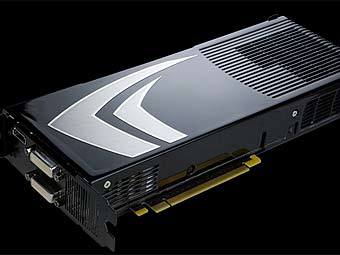
The NVIDIA GeForce 9800GX2 is the latest graphics card to revolutionise your PC experience. GeForce 9800 GX2 gives the best gaming performance in the world, HybridPower means a quiet, low power and more environmentally friendly PC and PureVideo HD takes your PC to the cutting edge of High Definition.

Bar None the fastest Graphics Card on the Planet

The GeForce 9800GX2 is at the cutting edge of technology; with 256 screaming fast processor cores and a 1GB total framebuffer, all running through PCI Express 2.0, means the GeForce 9800GX2 is designed from the ground up for Gaming at Extreme HD resolutions.

NVIDIA Hybrid Power – gives you power when you need it most

Combining a GeForce 9800GX2 with one of the latest motherboards featuring NVIDIA’s nForce 790i Ultra SLI chipset makes your system ready for Hybrid Power. Not all applications require a high end GeForce discrete GPU, for times such as these an integrated GeForce GPU can run these applications perfectly while saving power and therefore the environment. The intelligent Hybrid Power system can also combine the power of the GeForce 9800GX2 with the onboard graphics for maximum performance.

PureVideo HD – make your PC the centre of your digital home

PureVideo HD makes High Definition content come to life on your PC – whether video’s are downloaded, streamed, or on Blu-Ray – even the most demanding HD content plays back effortlessly thanks to the best HD engine available on the market. But it is not only the speed of HD rendering that is improved, with PureVideo HD films comes to life with dynamic Contrast Enhancement and automatic enhancements to Greens, Blues, & Skin Tones

The NVIDIA GeForce 9800GX2 Makes all of the above possible, for the very best graphics on the planet there is no other choice.

  • Processor Cores
  • 256 (128 per GPU)

  • Core Clock
  • 600MHz

  • Shader Clock
  • 1500MHz

  • Memory Clock
  • 1000MHz

  • Memory
  • 1GB GDDR3 (512MB per GPU)

  • Power Connector
  • 8-pin + 6-pin

  • Board Power
  • 197W

  • Thermal
  • Patent Pending Integrated Cooling Solution

  • Outputs
  • 2x DVI-DL + HDMI

2008/03/14

Asustek says two-thirds of Eee PCs will have Windows XP


TAIPEI (Reuters) - Asustek Computer (2357.TW: Quote, Profile, Research), the world's top maker of computer motherboards, said nearly two-thirds of its Eee PCs shipped this year will be Windows-based as consumers embrace the company's low-cost laptop models.

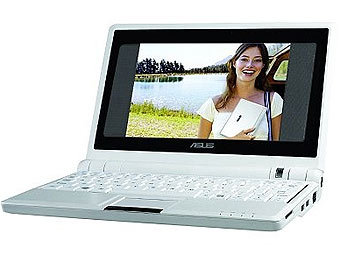
The Taiwan company's branded business last year launched a 7-inch child-friendly Linux-based personal computer priced as low as $200, and new models with Microsoft's (MSFT.O: Quote, Profile, Research) Windows XP will be priced around $390 to $400.

"About 60 percent of them (Eee PCs) will have Windows XP operating system," Asustek Chairman Jonney Shih said at a news conference.

The Eee PC has won Asustek much recognition worldwide and Shih said his company was keeping its previous target of shipping 5 million units this year versus 300,000 units shipped in 2007.

Sales have been the strongest in Europe, followed by Asia Pacific and China, said Lillian Lin, Asustek's head of marketing.

"There is a huge untapped computer market out there, and we want to get into the next 10 billion consumer market (with these lower cost computers)," said Davis Tsai, President of Microsoft Taiwan.

Industry analysts said the move would be beneficial to the Taiwan company, and Windows' software prices on low-cost models should be cheaper than that of the operating systems used on mainstream notebooks.

"A Windows Eee PC is more attractive to buyers because people are just not used to using Linux-based computers," said Alvin Kwock, analyst at JP Morgan.

Worth around $8.5 billion, Asustek separated this year its branded business from its contract manufacturing operations, which make laptops for Apple Inc (AAPL.O: Quote, Profile, Research), Dell Inc (DELL.O: Quote, Profile, Research), Hewlett-Packard (HPQ.N: Quote, Profile, Research) and Lenovo (0992.HK: Quote, Profile, Research).

Separately, Shih said Asustek was considering moving some of the firm's contract manufacturing facilities to Vietnam, following other larger contract manufacturers like Compal Electronics (2324.TW: Quote, Profile, Research) and Hon Hai Precision Industry (2317.TW: Quote, Profile, Research).

He did not give a specific time frame or investment figure.

Asustek's shares fell 2.66 percent on Thursday, in line with the drop on the benchmark TAIEX index .

Asustek competes with Acer Inc (2353.TW: Quote, Profile, Research) in own-brand laptops and with Hon Hai Precision Industry Co and Quanta Computer (2382.TW: Quote, Profile, Research) in its contract manufacturing operations.

Domestic telecom carrier Far Eastone (4904.TW: Quote, Profile, Research) also said on Thursday it was looking to invest in local telecom operators in Vietnam to support Taiwan businesses that were moving their facilities there.

Larger rival Chunghwa Telecom (2412.TW: Quote, Profile, Research) (CHT.N: Quote, Profile, Research), the island's largest telecommunications carrier, said earlier this week that it plans to step up its investment into Southeast Asia as the telecoms market in Taiwan becomes saturated.

2008/03/11

Notebooks based on Intel's Atom to cost between $250 and $300

More than 25 low-cost notebooks based on Intel Corp.'s upcoming Atom processor are in the works, including models from multinational PC vendors, according to the chip maker's top executive in Asia.

These Atom-based notebooks will be available in the middle of this year for about $250 to $300, said Navin Shenoy, general manager of Intel's Asia-Pacific operations, in an interview. "We'll see some slightly richer configurations that get up to $350," he said.

The Atom processor, formerly called Diamondville, is a small, low-power chip designed for inexpensive notebooks, a class of device that Intel and others refer to as netbooks. These machines are intended for first-time computer buyers in emerging markets, as well as users in mature markets who are willing to trade performance for a low-cost notebook that complements their existing computers -- a market that until now has been largely dominated by Asustek Computer Inc.'s Eee PC.

Atom will offer lower performance than Intel's Core 2 Duo processors for mainstream notebooks, but its performance will be good enough for browsing the Internet and sending e-mails, Shenoy said.

Intel Chief Technology Officer Justin Rattner was more specific about the processor's capabilities last month, telling reporters that a related chip, called Silverthorne, offers performance similar to Banias, the first version of Intel's Pentium M processor released in 2003. Silverthorne is designed for small, handheld computers that Intel calls Mobile Internet Devices, and will be available as part of the Centrino Atom chip package set for release during the second quarter.

The introduction of the Atom and the rush of vendors to build the chip into low-cost notebooks could mark the emergence of a new type of device, expanding on the early success of Asustek's Eee PC. But not everyone is convinced that there is much demand for low-cost notebooks, either as a secondary computing device or a substitute for a more capable, and more expensive, notebook PC.

Bryan Ma, director of personal systems research at IDC Asia-Pacific, is a self-described skeptic and doubts that low-cost notebooks will have more than a limited impact on the market for portable computing devices as long as performance and features are traded for lower prices. "I was never convinced that price was the best way to sell these products," he said.

But the marketing clout of Intel and top-tier PC vendors could alter this equation by creating additional demand among customers in both emerging markets and developing countries. "Intel pushing this gives it more legs," Ma said.

"There's going to be some experimentation," Shenoy said.

Most Atom-based notebooks will have screens ranging in size from 7 in. up to 10 in., Shenoy said, adding that some models will be equipped with screens that can swivel and lay flat against the keyboard, turning the device into a tablet computer. Devices will ship with either hard disks or solid-state drives that use flash memory and offer battery life ranging from three to five hours, he said.

"Some will be really sleek and thin; some will be a bit more ruggedized," Shenoy said, adding that Wi-Fi will likely be a common feature.

On the software side, Atom-based notebooks will ship with either Windows XP or some version of Linux. "I don't think you'll see a lot of Vista in this space for cost reasons," Shenoy said.

The availability of Windows XP on low-cost notebooks set to arrive during the middle of the year is noteworthy because Microsoft Corp. has stated that Windows XP licenses will not be sold after June 30. Microsoft officials in Singapore reaffirmed the June 30 deadline in a statement released through the company's public relations agency. But that doesn't necessarily mean that Windows XP will completely disappear after June 30.

"There are probably going to be certain exceptions here and there," IDC's Ma said.

New Eee PC will use Intel's new Atom


Asus' head honcho has spilt more beans on details of the version two Eee PC model. It will use Intel's recently-branded Atom processor designed for sub-notebook machines just like the Eee and its growing band of rivals.

In an interview with Laptopmag.com, Jerry Shen said later versions of the Eee PC may even come with a built-in hard drive as opposed to solid state. New versions of the machine were announced at last week's CeBIT show for launch in the summer.

A Windows XP version will be available - the 8GB Eee PC 900, while storage now tops out at 12GB for the high-end model with Linux on board. That'll replace the current Eee PC 701 model.

The new machines will feature the 'Diamondville' derivative of the 45nm Atom processor. The chip is a 1.6GHz low voltage, single-core variant with a 512KB cache. A dual-core version seems likely to follow.

New colours also planned

What's more, the Eee will ship in other colours. Shen said there would be "a very new colour design" introduced in the early summer.

The new 900 will cost €399 and will boast an 8.9-inch screen. Asus said the model was on the way during its press conference at CES in January, when it also announced it was working with Intel to provide WiMAX support on the machine.

This won't be in available until later in the summer it seems, but will instead be in the third-generation machine late this year - also depending on partnerships with WiMAX or cellular providers.

Asus is quoting quite staggering sales figures for the machine. Some 350,000 have been sold since launch with a projected 3 to 5 million units to be sold this year. The diminutive lappy is certainly creating a lot of interest.

Any hard drive-based Eee won't appear until far later in the year, said Shen.

Source: http://www.tech.co.uk/computing/mobile-computing/notebooks-and-tablet-pcs/news/new-eee-pc-will-use-intels-new-atom?articleid=326404251