Search

Google
 
Showing posts with label PC. Show all posts

2008/03/20

Intel cheap laptops expanding to U.S., Europe


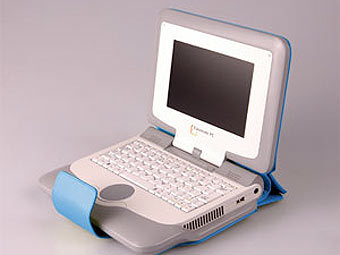
Intel Corp (INTC.O: Quote, Profile, Research) said on Wednesday sub-$300 laptops initially designed for poor children will soon be available to U.S. and European consumers in a move that could further push down computer prices.

PC makers in the United States and in Europe will sell a yet-to-be-unveiled, second-generation version of the Intel-designed Classmate PC for $250 to $350, said Lila Ibrahim, general manager of Intel's emerging market platform's group, in an interview with Reuters.

"This is a very big deal," said Laura Didio, an analyst with Yankee Group who follows the personal computer industry.

While the machines are intended for children, analysts said the launch will add momentum to the low-cost computing movement -- and will likely mean this year's bargain-basement laptops will have more power than in previous years.

"Particularly in a recession year, quality low-cost products are going to move well," said Rob Enderle, an analyst with the Enderle Group. "But the key is for them to be quality."

He said while he hasn't yet seen the machines that will be on sale this Christmas, he suspects consumers will be able to get "a pretty decent" laptop for less than $600 and perhaps for less than $500.

Didio said retailers might throw in another $50 to $100 in rebates or other incentives.

Laptop prices have been under extra pressure since last year, when Taiwan's Asustek Computer Inc (2357.TW: Quote, Profile, Research) introduced the $399 Eee PC, which has flown off store shelves from Asia to North America

The machine runs on the Linux operating system, and people used to Microsoft's (MSFT.O: Quote, Profile, Research) Windows and Apple's (AAPL.O: Quote, Profile, Research) Mac OS X operating systems have had trouble adapting to the system, Enderle said.

The new, cheap laptops being developed from Intel's technology will likely run on Windows, he added.

The movement toward low-cost computing was also spurred by the XO laptop, the brainchild of Massachusetts Institute of Technology professor Nicholas Negroponte and his One Laptop Per Child Foundation.

The foundation began producing a laptop running on Linux at a cost of $188 in November. They sold them in the United States and in Canada for $400 through a charity drive that also provided one machine to a poor child overseas.

The chipmaker has conducted pilot tests of the Classmate PC at schools in Texas, Oregon and California, along with some schools in Australia, said Intel spokeswoman Agnes Kwan.

Intel said manufacturers in India, Mexico and Indonesia already have begun selling Classmate PC laptops on the retail market.

To date, Intel has sold fewer than 100,000 of the Classmate PCs, but plans to ramp up production in 2008.

Intel declined to identify the PC makers or discuss the features of the second-generation machine, which has not yet been released in developing markets, at the request of the companies.

It has already begun work on a third model, the Classmate 3, said Ibrahim.

The second- and third-generation models of the Classmate PC design give manufacturers flexibility to build a range of laptops with different memory configurations, screen sizes and peripheral devices including cameras, Ibrahim said.

Inventor Mary Lou Jepsen, a scientist who developed the XO Laptop, resigned from the One Laptop Per Child Foundation at the end of last year and started her own company Pixel Qi with the goal of building a $75 laptop by 2010.

Source: http://www.reuters.com/article/technologyNews/idUSN1933198020080320?pageNumber=3&virtualBrandChannel=10150

2008/03/11

Notebooks based on Intel's Atom to cost between $250 and $300

More than 25 low-cost notebooks based on Intel Corp.'s upcoming Atom processor are in the works, including models from multinational PC vendors, according to the chip maker's top executive in Asia.

These Atom-based notebooks will be available in the middle of this year for about $250 to $300, said Navin Shenoy, general manager of Intel's Asia-Pacific operations, in an interview. "We'll see some slightly richer configurations that get up to $350," he said.

The Atom processor, formerly called Diamondville, is a small, low-power chip designed for inexpensive notebooks, a class of device that Intel and others refer to as netbooks. These machines are intended for first-time computer buyers in emerging markets, as well as users in mature markets who are willing to trade performance for a low-cost notebook that complements their existing computers -- a market that until now has been largely dominated by Asustek Computer Inc.'s Eee PC.

Atom will offer lower performance than Intel's Core 2 Duo processors for mainstream notebooks, but its performance will be good enough for browsing the Internet and sending e-mails, Shenoy said.

Intel Chief Technology Officer Justin Rattner was more specific about the processor's capabilities last month, telling reporters that a related chip, called Silverthorne, offers performance similar to Banias, the first version of Intel's Pentium M processor released in 2003. Silverthorne is designed for small, handheld computers that Intel calls Mobile Internet Devices, and will be available as part of the Centrino Atom chip package set for release during the second quarter.

The introduction of the Atom and the rush of vendors to build the chip into low-cost notebooks could mark the emergence of a new type of device, expanding on the early success of Asustek's Eee PC. But not everyone is convinced that there is much demand for low-cost notebooks, either as a secondary computing device or a substitute for a more capable, and more expensive, notebook PC.

Bryan Ma, director of personal systems research at IDC Asia-Pacific, is a self-described skeptic and doubts that low-cost notebooks will have more than a limited impact on the market for portable computing devices as long as performance and features are traded for lower prices. "I was never convinced that price was the best way to sell these products," he said.

But the marketing clout of Intel and top-tier PC vendors could alter this equation by creating additional demand among customers in both emerging markets and developing countries. "Intel pushing this gives it more legs," Ma said.

"There's going to be some experimentation," Shenoy said.

Most Atom-based notebooks will have screens ranging in size from 7 in. up to 10 in., Shenoy said, adding that some models will be equipped with screens that can swivel and lay flat against the keyboard, turning the device into a tablet computer. Devices will ship with either hard disks or solid-state drives that use flash memory and offer battery life ranging from three to five hours, he said.

"Some will be really sleek and thin; some will be a bit more ruggedized," Shenoy said, adding that Wi-Fi will likely be a common feature.

On the software side, Atom-based notebooks will ship with either Windows XP or some version of Linux. "I don't think you'll see a lot of Vista in this space for cost reasons," Shenoy said.

The availability of Windows XP on low-cost notebooks set to arrive during the middle of the year is noteworthy because Microsoft Corp. has stated that Windows XP licenses will not be sold after June 30. Microsoft officials in Singapore reaffirmed the June 30 deadline in a statement released through the company's public relations agency. But that doesn't necessarily mean that Windows XP will completely disappear after June 30.

"There are probably going to be certain exceptions here and there," IDC's Ma said.

2008/03/06

XPS 720 Red (Vista)


Offer Details
  • Intel® Core™2 Q6600 Quad-Core (8MB L2 cache,2.4GHz,1066FSB)
  • Genuine Windows Vista® Home Premium
  • 22 inch SP2208WFP Wide Flat Panel with Webcam and Mic
  • Single Drive: 16X CD/DVD burner (DVD+/-RW) w/double layer write capability
  • 2GB4 Corsair Dominator DDR2 SDRAM 800MHz OC'd to 1066MHz-2 DIMMs
  • 320GB3 - Seagate 7200RPM, SATA 3.0Gb/s, 16MB Cache
  • Dual nVidia GeForce 8800 GT 512MB4
  • Sound Blaster® X-Fi™ XtremeGamer (D) Sound Card
  • 1Yr In-Home Service,2 Parts + Labor,5 24x7 Phone Support
Tech Specs

Processors
Intel® CoreTM 2 Extreme Processor QX6800 (8MB L2 Cache, 3.20GHz, 1066MHz FSB)
Intel® CoreTM 2 Extreme Processor QX6700 (8MB L2 Cache, 2.93GHz, 1066MHz FSB)
Intel® CoreTM 2 Quad Processor Q6600 (8MB L2 Cache, 2.40GHz, 1066MHz FSB)
Intel® CoreTM 2 E6700 (4MB L2 Cache, 2.66GHz, 1066MHz FSB)
Intel® CoreTM 2 E6600 (4MB L2 Cache, 2.40GHz, 1066MHz FSB)

Operating System
Genuine Windows Vista® Ultimate
Genuine Windows Vista® Home Premium
Genuine Windows® XP Professional
For more details on Dell systems that run Windows Vista, see www.dell.com/vista.

Chipset
The NVIDIA® nForce 680i SLITM MCP core logic enables two graphics cards to work together rendering a single image. All connected by PCI Express x16 bandwidth to help provide the ultimate visual experience. NVIDIA nForce® 680i SLITM Chipset for Intel (D)6
Engineered for Enthusiasts NVIDIA nForce 680i SLI Intel Edition (D)
NVIDIA SLI technology 2x16
Dual DDR2 Memory Architecture X
NVIDIA SLI-Ready Memory
NVIDIA MediaShield Storage X
NVIDIA Native Gigabit Ethernet* X
NVIDIA FirstPacket technology
NVIDIA DualNet technology
NVIDIA nTune Utility X
NVIDIA SLI Certified Components X
PCI Express X
High Definition Audio X
USB 2.0 X

Memory
DDR213 is a memory architecture that enables systems to improve performance and reduce power consumption. The amount of RAM you have is one factor that determines how many programs can be executed at one time and how much data can be readily available to a program. It also determines how quickly your applications perform and how many applications you can easily toggle between at one time. Simply put, the more RAM you have, the more programs you can run smoothly and simultaneously. Up to 4GB89 Dual-Channel DDR213 SDRAM (667MHz or 800MHz, 2 or 4 DIMMs)
XPS 720 Supports up to 8GB9 of Dual-Channel DDR213 SDRAM (667MHz or 800MHz, 4 DIMMs) when a 64-bit Operating System is installed
XPS 720 supports EPP Memory for simplified memory overclocking>

Hard Drives
The XPS 720 supports up to four hard drives12, –providing a potential capacity of up to 2.75TB11 total. And with RAID 1 and RAID 0 options, you can configure your storage to meet your needs, whether it's for storing large quantities of files, backing up system information and files, or improving performance with data striping.

Dell can ship up to 3 hard drives installed.Up to 2.75TB11 Multiple Serial ATA Hard Drives
Up to 1TB311 Single Serial ATA Hard Drive

Optical Drives, Floppy Drive, and Media Reader
Blu-ray disc
Multiple DVD+/-RW, Combo, DVD-ROM configurations Available
Optional Blu-Ray drive, 16x DVD+/-RW drive; 48X Combo Available
3.5" Floppy Drive and 13-in-1 Media Reader Available
Graphics
XPS 720 Red
512 MB DDR3 nVidia® GeForce® 8800 GT - SLI capable
768MB DDR3 nVidia® GeForce® 8800 GTX graphics card - SLI capable
768MB DDR3 nVidia® GeForce® 8800 Ultra graphics card - SLI capable
XPS 720 Black
256MB DDR3 nVidia® GeForce® 8600 GTS graphics card - SLI capable
512 MB DDR3 nVidia® GeForce® 8800 GT - SLI capable
768MB DDR3 nVidia® GeForce® 8800 GTX graphics card - SLI capable
768MB DDR3 nVidia® GeForce® 8800 Ultra graphics card - SLI capable

Sound Cards
Integrated 7.1 Intel High Definition Audio – Standard
Sound Blaster X-FiTM XtremeMusic (D)6 - Included

Physics Accelerator
AGEIA® PhysXTM physics accelerator (optional)
Note: Games must be designed to take advantage of the PhysX accelerator.

Weight & Dimensions
Width: Without Stand 8.6"(21.9 cm) / With Stand 14.0"(35.6 cm)
Height: Without Stand 21.9"(55.5 cm) / With Stand 22.5"(57.2 cm)
Depth: 23.4"(59.4 cm)
Weight: Typical configuration 47.8 lbs (21.7 kg) / Maximum Configuration 56.4 lbs (25.6 kg)

Externally Accessible
Video: 2 DVI and 1 S-Video
IEEE 1394 - 1 front & 1 back 6-pin serial connector
USB: 10 Ports (2 Front, 6 Back, 2 internal)
Audio: Audio – Front: headphone, microphone; Back: line-in, line-out, microphone, surround, center/LFE; integrated HDA 7.1 channel sound
Network: Integrated Gigabit10 Ethernet
Legacy: 2 PS/2 Ports
1 - S/P DIF out (optical)

Expansion Slots
PCI: 3 Slots
PCIe x1: 1 Slot
PCIe x16 (Graphics): 2 Slots
PCIe x8: 1 Slot

Chassis
Power Supply: 1KW (Red system) or 750W (Black system) - SLI, ATX2.0, EPS12V, SSI industry compatibility
Externally available: 2 Optical (5.25), 1 9-in-1 Media Card reader (2 x 5.25) & 1 Floppy (3.5)
Internally available: 4 x 3.5 (HDD)
Memory DIMM slots: 4 available
(H x W x D): 22.5” x 8.6” x 24.25” (with stand); 21.86” x 8.6” x 24.25” (without stand)
7-slot BTX motherboard (12.6" x 10.5")

XPS ONE


Offer Details
  • 20 inch widescreen display with Intel® Core™2 Duo E4500
  • Genuine Windows Vista® Home Premium
  • 8X Slot load CD/DVD burner (DVD+/-RW)
  • 2GB* Dual Channel DDR2 SDRAM at 667MHz - 2 DIMMs
  • 250GB* Serial ATA 3Gb/s Hard Drive (7200RPM) w/DataBurst Cache™
  • Integrated Video
  • Integrated Audio - 2.0 Speakers
  • 1Yr In-Home Service,* Parts Labor, 24x7 Phone Support
Design

Break the Mold
Even when space is at a premium, the Dell XPS One is a perfect fit. Just over 16" tall with a single cord that rests flush against the body of the computer, it sits comfortably in even compact workspaces.


Look Sharp
To help you stay in touch with friends and interact with the online community, the XPS One features a discreet 2-megapixel webcam and enhanced-capture, dual-microphone array with noise cancellation. LED lights tell you when the camera is on and stay dark when it’s not in use.

Sonic Sensation
Maximize your listening pleasure. The XPS One features integrated right and left speakers for incredible Hi-Def sound. And when you want to listen to music with the lights down low, a single touch dims the screen while the songs play on.


Entertainment Command Center
Use your XPS One as a media hub with:

  • Easy data transfer options, including an 8-in-1 media card reader, USB drives, IEEE 1394a data ports, integrated gigabit Ethernet and more
  • Integrated 802.11a/b/g/n Draft 2.0 Wi-Fi so you can share files, printer access and a broadband connection across multiple systems in your home
  • Internal BlueTooth 2.0 for wireless connection to Bluetooth-enabled peripherals like your PDA or cell phone
  • Standard DVD+-/RW drive so you can watch or burn video and audio discs or back up your data
  • Optional BluRay Disc Drive for additional storage and viewing high def movies

2008/03/04

Neural Impulse Actuator - The Future of Immersive Gaming


Sunnyvale, Calif.—March 3, 2008—OCZ Technology Group, a worldwide leader in innovative, ultra-high performance and high reliability memory and components for enthusiasts and gamers, is pleased to announced the Neural Impulse Actuator (NIA) has begun mass production and launch into channel is imminent. A prototype was debuted last year at CeBIT 2007 which generated a newfound excitement in the global gaming community.

OCZ saw an exciting opportunity to enhance the gaming experience and take PC gameplay to new heights. The NIA is not a replacement for a mouse but rather a pioneering new peripheral designed to provide an immersive experience for gamers. The NIA is the first commercially available BCI (brain-computer interface) specifically for PC gamers.

“Advances in hardware and software allow today’s games to offer consumers an exceptional entertainment experience, and we wanted to take the next step by immersing gamers into these environments with the innovative new NIA,” stated Ryan Petersen, CEO of the OCZ Technology Group. “The NIA radically changes the ways that gamers can interact and control elements within games, and can be configured in a matter of minutes for any game that is already published or will be released.”

The commands are easily assigned with the NIA’s user-friendly software and are calibrated based on the individual’s physiology and personal preferences. Each of the Actuator’s signals can be assigned to a specific keystroke on the keyboard or a mouse button; consequentially, gamers can run, jump, and fire faster all without “lifting a finger.” Because the NIA converts EEG (electroencephalograph) signals into specified keystrokes, the device can be used with any software. Upon proper configuration, the NIA will allow users to control PC games without the use of a keyboard and minimal use of a mouse.

The final version of the NIA uses a sleek metal housing, a USB 2.0 interface, and streamlined headband with carbon “dry” interface sensors. Due to the anticipation surrounding the release of the NIA, OCZ will be demoing the mass production device and begin accepting orders at the CeBIT 2008 in Hannover, Germany.